Explore Bhutan on a 7-day private tour with scenic short hikes to temples, valley viewpoints and Tiger’s Nest, plus cultural visits in Thimphu, Punakha and Paro.
Bhutan invites you to travel differently. Rather than rushing between landmarks, this seven-day journey gives you time to understand the country through its mountain paths, living monasteries, traditional towns and quiet moments of reflection.
Beginning in Paro, you’ll travel through Thimphu and Punakha before returning to the Paro Valley. Along the way, you’ll walk through rhododendron forests, cross river valleys, meet Bhutanese communities and visit some of the kingdom’s most important spiritual and cultural sites.
The journey balances gentle exploration with rewarding hikes, including the forested trail to Lungchutse Temple, the hilltop walk to Khamsum Yulley Namgyal Chorten and the memorable ascent to Tiger’s Nest Monastery. Time is also set aside for local food, town walks, photography and unhurried evenings.
Designed for culturally curious travellers who value comfort, thoughtful pacing and genuine connection, this itinerary offers an introduction to Bhutan that feels both enriching and manageable.
You’ll experience Bhutan through its landscapes, spiritual traditions, daily rituals and deeply rooted sense of place. Expect meaningful cultural encounters, scenic walks, historic fortresses and enough space to notice the quieter details that make Bhutan so distinctive.
For 2 travellers:
- Twin Sharing (per person): SGD 4,190
- Single Supplement (per person): SGD 4,490
For 3 to 5 travellers:
- Twin Sharing (per person): SGD 4,060
- Single Supplement (per person): SGD 4,360
Travel on your preferred dates, subject to flight, guide and accommodation availability.
Private departures can be arranged.
Elevation: 2,334 metres
Approximate drive time: 1.5 hours
Your journey begins as you land at Paro International Airport, surrounded by forested slopes and the mountains of western Bhutan. After completing arrival formalities, your guide will welcome you outside the terminal and accompany you to Thimphu.
The drive follows the Paro and Wang Chhu rivers, giving you an early introduction to Bhutan’s rural scenery, traditional homes and prayer flags. As this is your first day at altitude, the pace will remain gentle.
After checking into your hotel, settle in and enjoy your first taste of Bhutanese cuisine.
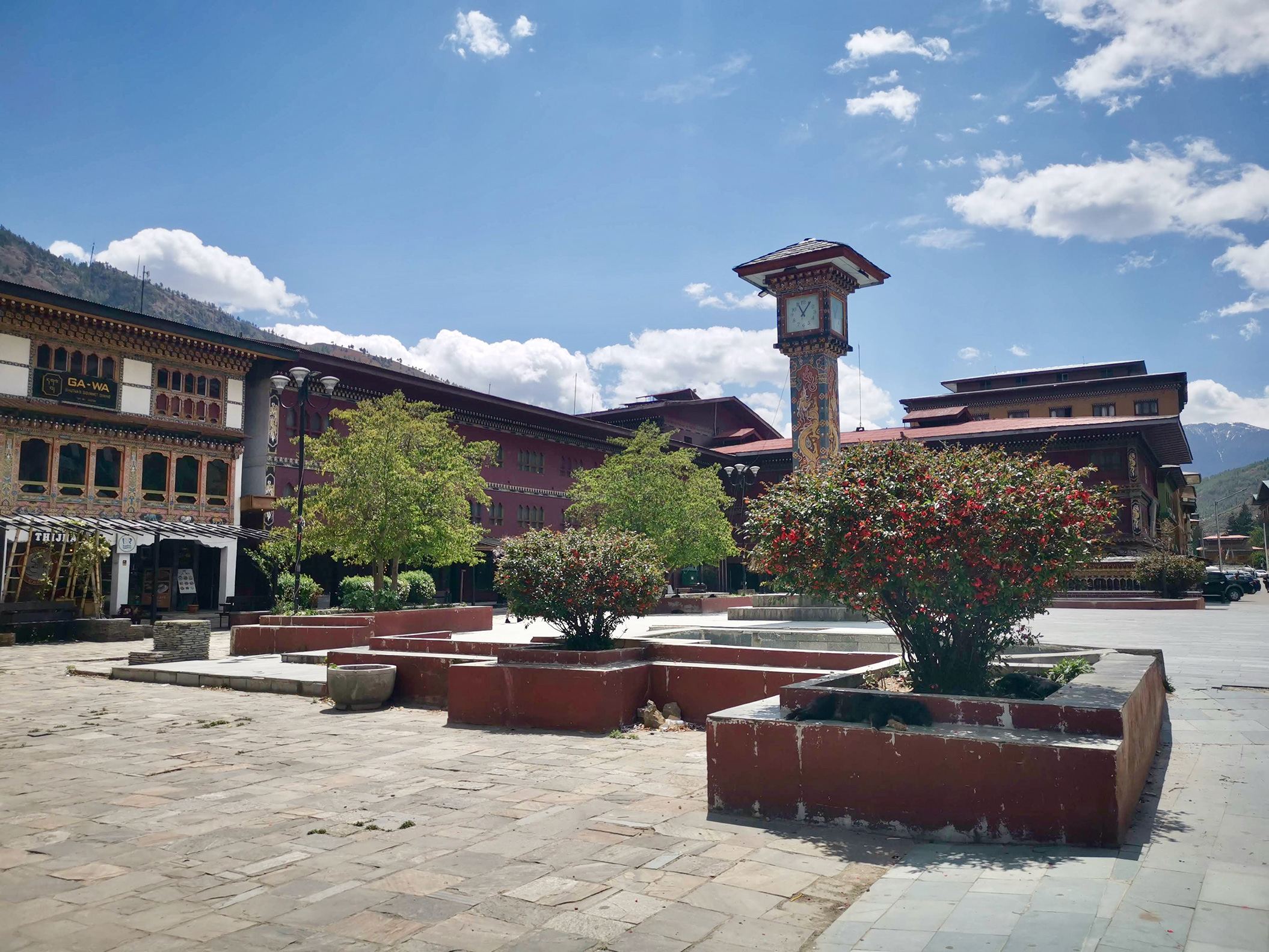
Later in the day, explore Bhutan’s capital on foot. Begin at Clock Tower Square, where carved wooden façades, fountains and prayer wheels frame one of Thimphu’s liveliest gathering spaces.
Continue along Norzin Lam, the city’s main street, passing handicraft shops, small cafés, textile stores and traditional buildings. The walk offers a relaxed introduction to how modern Bhutanese life sits alongside long-held customs.
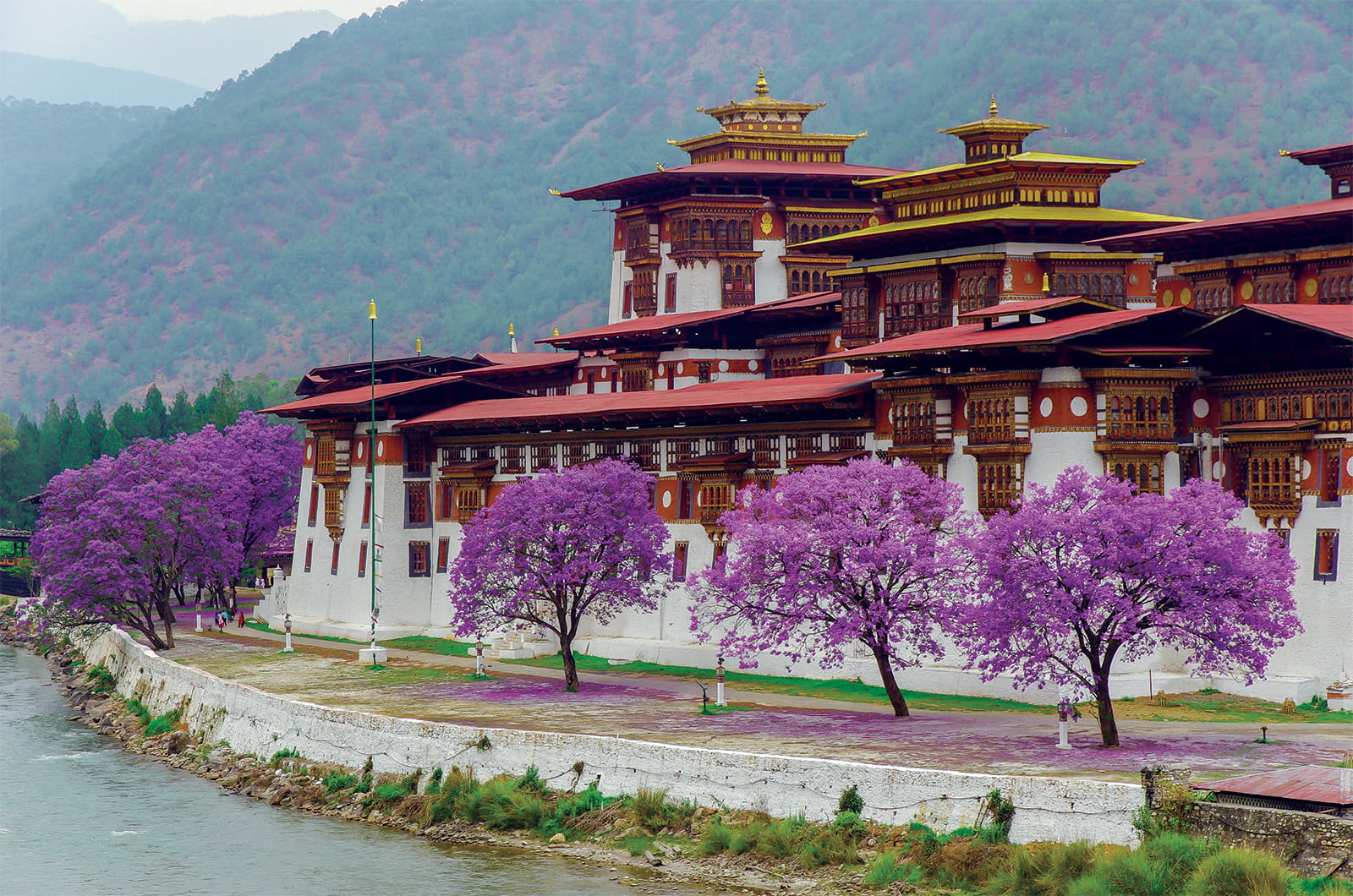
As evening approaches, visit the surroundings of Tashichho Dzong. Floodlights illuminate the fortress walls and golden roofs, creating a calm and striking scene beside the Wang Chhu River.
This is a peaceful way to close your first day, with time to take photographs and absorb the atmosphere as the capital grows quieter.
Overnight in Thimphu.
Elevation: 2,334 metres
Approximate drive time: Local sightseeing
Thimphu is Bhutan’s political, religious and commercial centre, yet it retains the scale and rhythm of a small Himalayan city. Today offers a closer look at the capital through its markets, temples, wildlife and spiritual landmarks.
The day is designed to balance sightseeing with gentle walking and time to observe local life.
Begin at the Centenary Farmers’ Market, where growers and traders gather to sell vegetables, fruit, herbs, grains and local produce.
As you move between the stalls, you’ll see an everyday side of Bhutan that many visitors miss. Depending on the day, you may also find traditional textiles, baskets, wooden utensils and small food stalls serving momos, fruit and freshly prepared snacks.
Please note that the main market is generally busiest on weekends. Alternative local market experiences may be arranged when necessary.
Continue to Kuenselphodrang Nature Park, home to the Great Buddha Dordenma. The gilded bronze statue rises above Thimphu Valley and contains a large meditation hall within its base.
After exploring the site, enjoy a relaxed walk along the surrounding nature trails. The paths offer open views across the capital and a quieter perspective on the valley.
Visit the forested sanctuary of Bhutan’s national animal, the takin. The reserve began as a small zoo, but after the animals refused to leave the area when released, the space was converted into a protected preserve.
The visit offers an easy wildlife encounter and an introduction to one of Bhutan’s most unusual national symbols.
Return to Tashichho Dzong for a closer look at the fortress by day. Known as the Fortress of the Glorious Religion, it serves as an important centre of Bhutanese government and monastic life.
Walk through its courtyards and admire the painted woodwork, whitewashed walls and carefully proportioned architecture. Access may depend on government functions and official ceremonies.
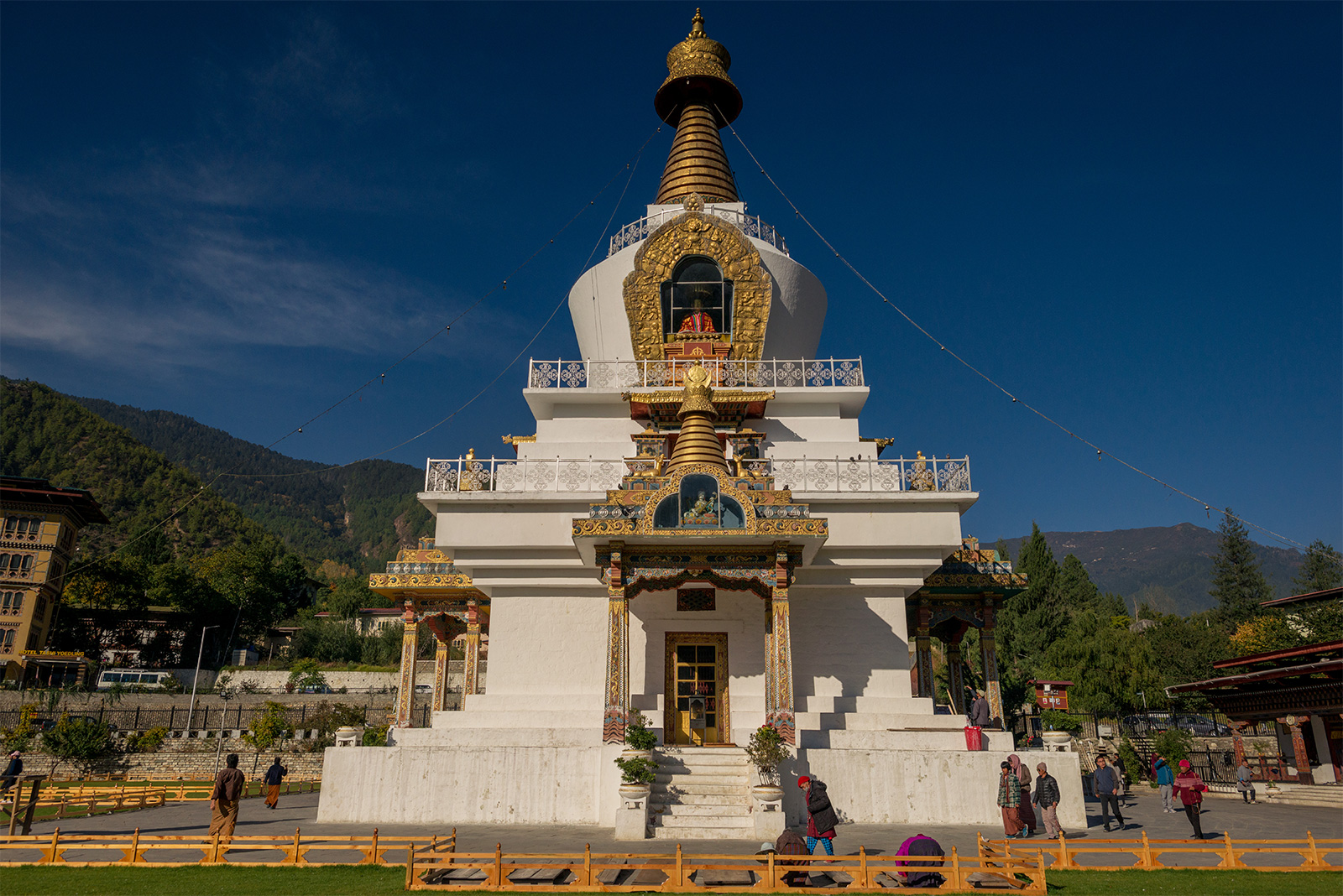
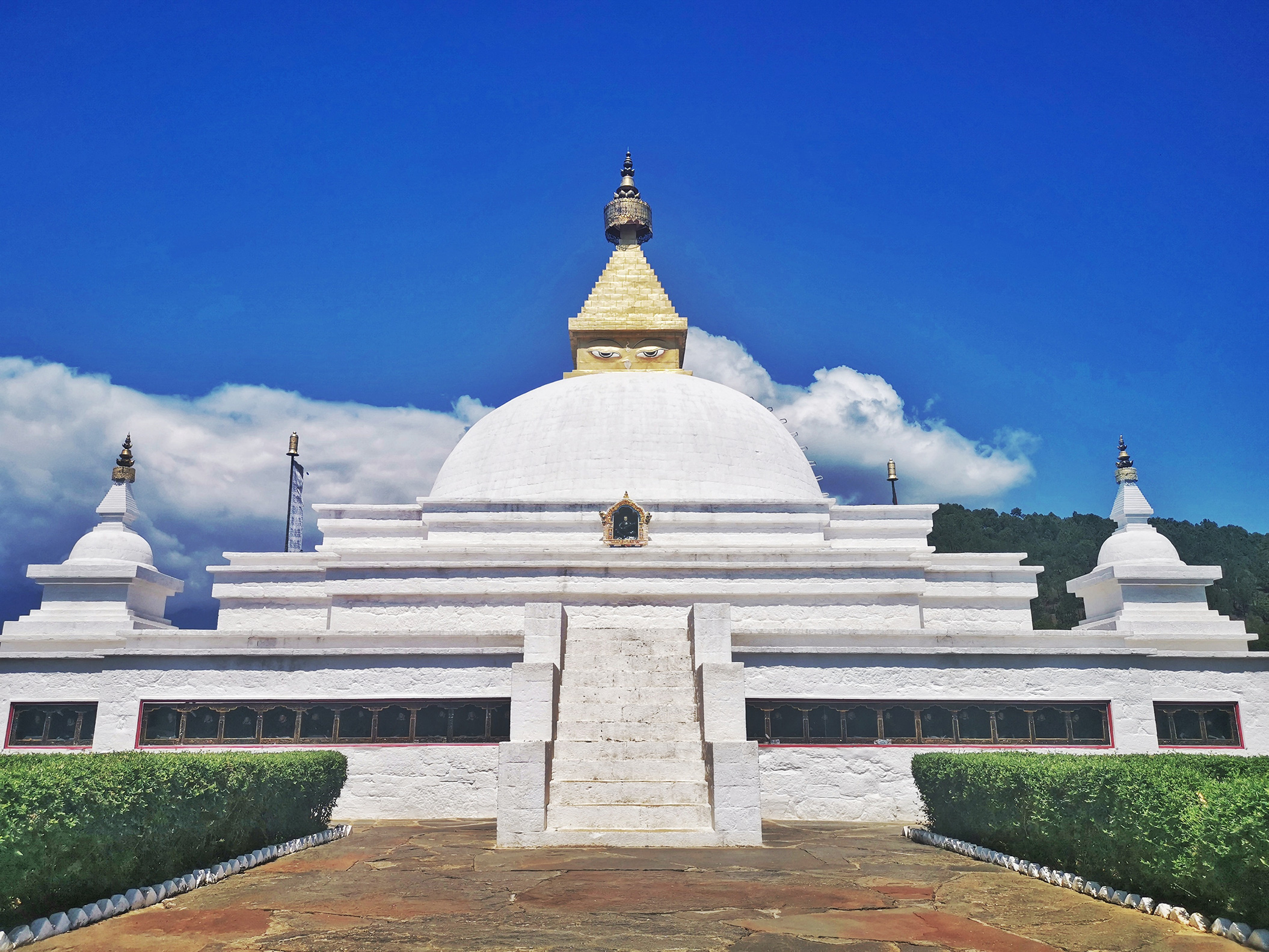
End the day at the National Memorial Chorten, one of Thimphu’s most active places of worship.
Here, local residents walk clockwise around the whitewashed stupa, turn prayer wheels and recite mantras. Built in 1974 in memory of Bhutan’s Third King, the chorten offers an intimate view of everyday Buddhist devotion.
Overnight in Thimphu.
Elevation in Punakha: 1,242 metres
Approximate drive time: 2.5 hours, excluding stops and hiking
Leave Thimphu after breakfast and begin the journey towards Punakha, Bhutan’s former capital.
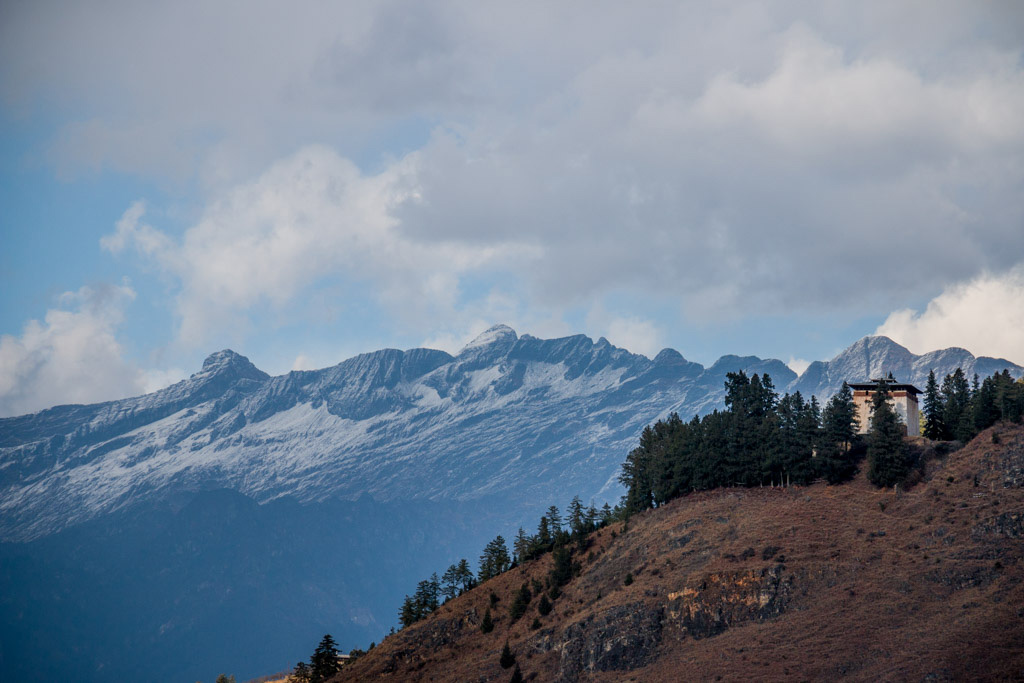
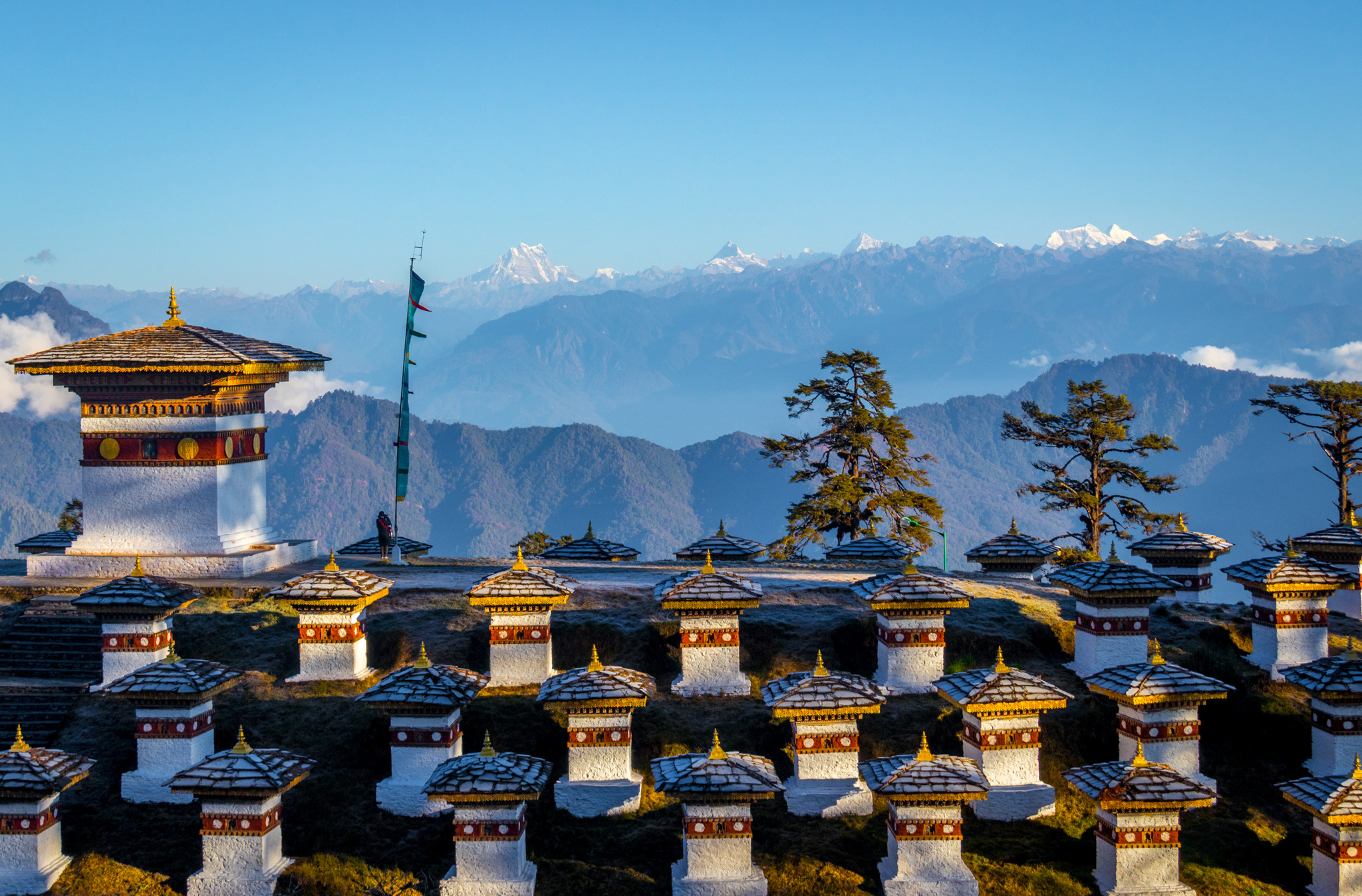
The road climbs to Dochula Pass at approximately 3,140 metres. On a clear day, the pass offers views towards Bhutan’s high Himalayan peaks. It is also home to the 108 Druk Wangyal Chortens, built in honour of Bhutan’s soldiers and the country’s Fourth King.
From Dochula, begin the hike towards Lungchutse Temple.
The trail climbs gradually through forests of hemlock, birch, rhododendron, juniper and bamboo. Moss-covered branches and long strands of prayer flags give parts of the route a secluded atmosphere.
Near the summit, a final trail leads past fluttering prayer flags to Lungchutse Temple. In clear conditions, the surrounding ridge offers wide views across the Himalayan range.
The complete walk takes approximately four hours. Trail conditions and visibility can change with the weather.
After the hike, continue downhill into the warmer Punakha Valley, where rice terraces and subtropical vegetation replace the higher mountain forests.
Visit Punakha Dzong, set at the confluence of the Pho Chhu and Mo Chhu rivers.
Built in 1637 by Zhabdrung Ngawang Namgyal, the fortress played a central role in Bhutan’s religious and political history. It was also the setting for the coronation of Bhutan’s first king in 1907.
Cross the traditional cantilever bridge before entering the courtyards. Inside, intricate woodwork, murals and monastic halls reveal the skill of Bhutanese craftspeople.
The dzong remains the winter residence of the central monastic body and continues to function as a living religious institution.
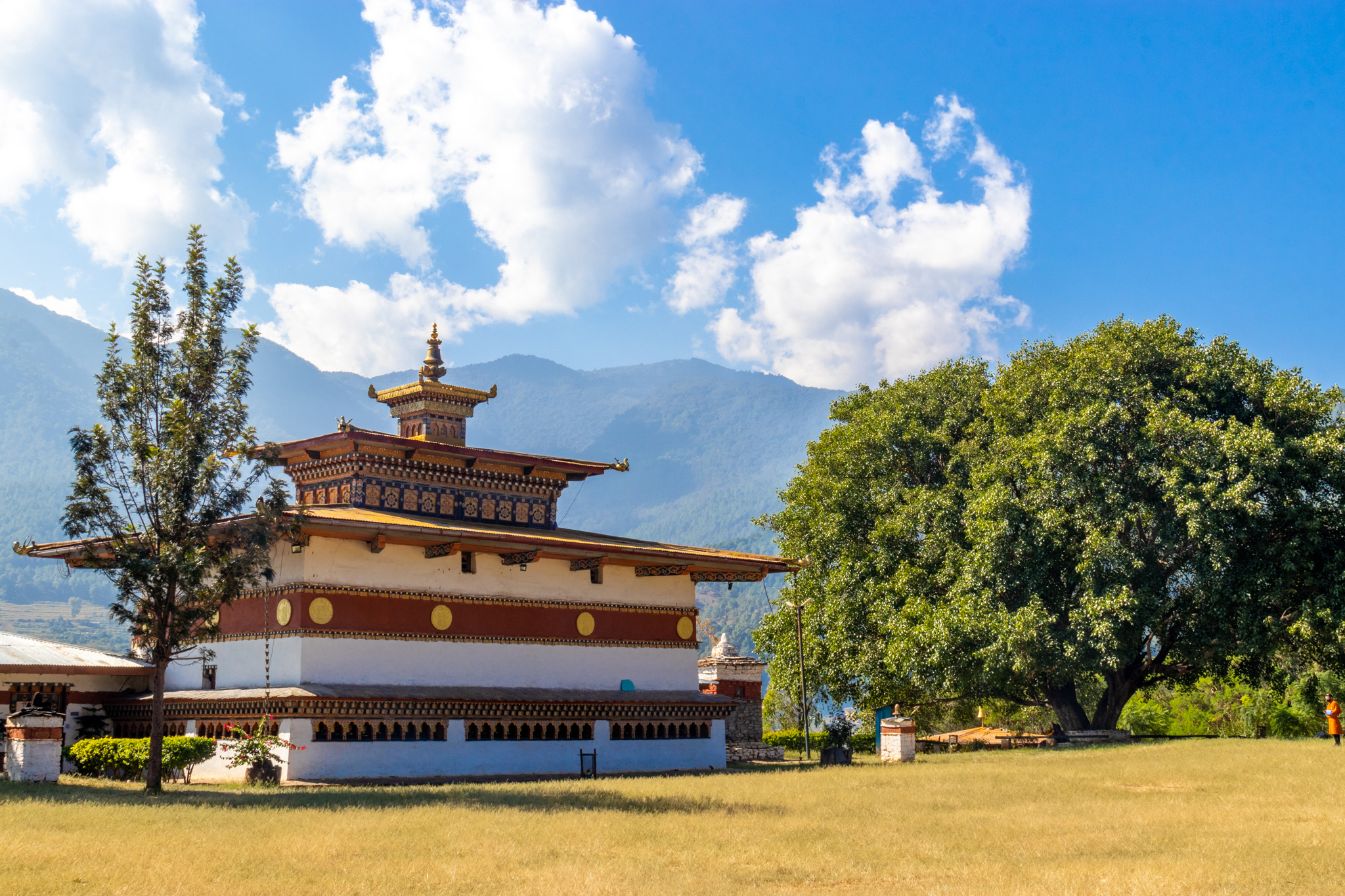
Continue to Sopsokha village for the walk to Chimi Lhakhang, commonly known as the Fertility Temple.
The trail passes through fields and village lanes before reaching the small hilltop temple. Chimi Lhakhang is associated with Lama Drukpa Kunley, the unconventional Buddhist teacher remembered as the Divine Madman.
Pilgrims visit the temple to receive blessings, particularly those hoping to start a family. The walk also offers an insight into rural life in the Punakha Valley.
Cross the 160-metre suspension bridge over the Pho Chhu River.
Prayer flags line the bridge, while the river and surrounding valley open beneath you. The crossing offers views towards Punakha Dzong and is a rewarding place for photography.
Overnight in Punakha.
Today unfolds at a slower pace, allowing you to experience Punakha’s rural scenery and spiritual landmarks without a long journey between destinations.
The valley’s lower altitude and warmer climate support rice cultivation, fruit trees and subtropical vegetation, creating a marked contrast with Thimphu.
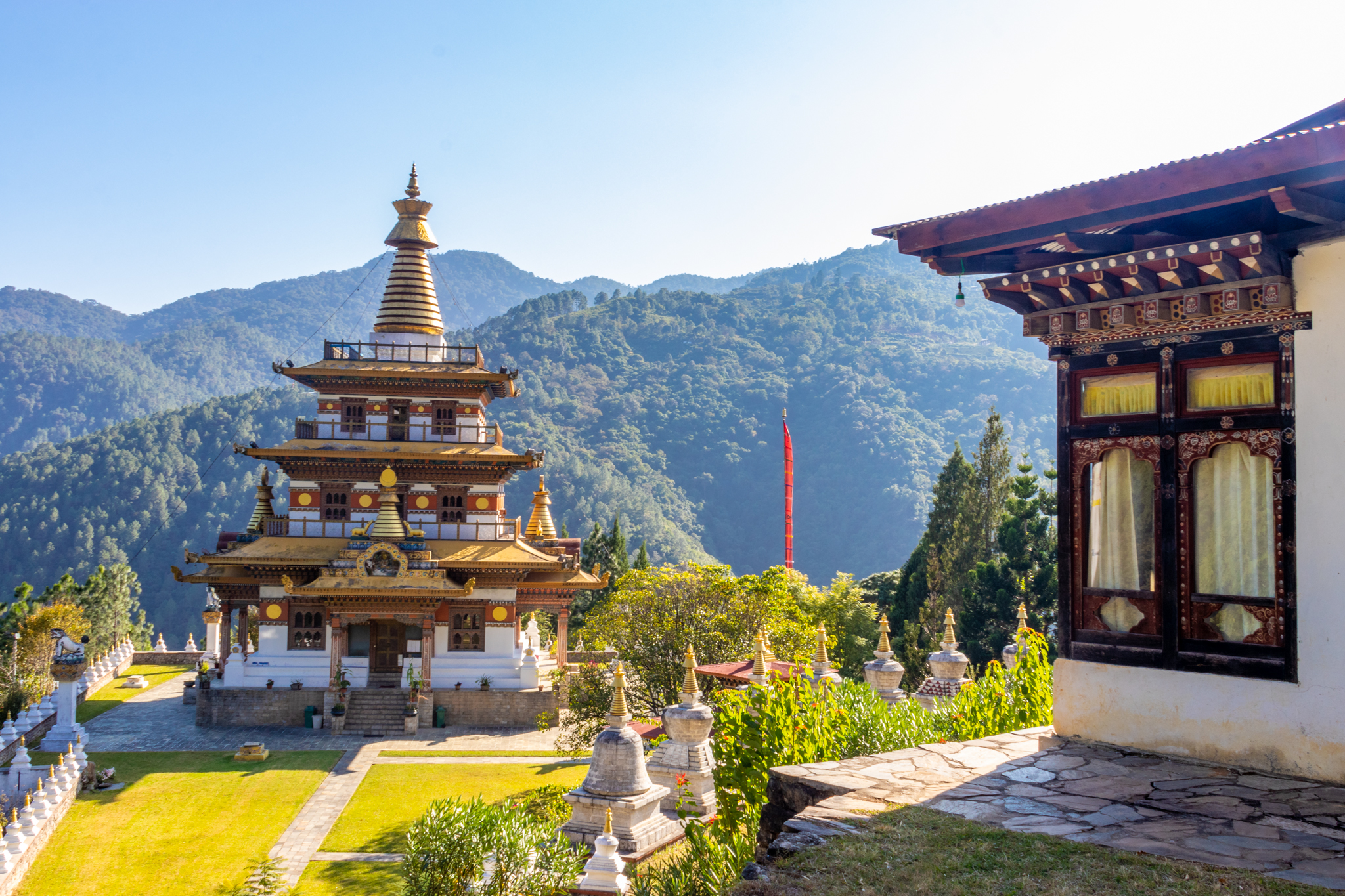
Begin with a walk across a suspension bridge and through fields before climbing towards Khamsum Yulley Namgyal Chorten.
The ascent takes approximately one hour, following a gradually rising trail through farmland and forest.
The chorten was commissioned by the Queen Mother to promote peace, harmony and well-being. Inside, several floors contain detailed paintings, protective deities and Buddhist imagery associated with Vajrayana traditions.
From the upper level, look out across the river, rice fields and surrounding hills before beginning the descent.
Approximate duration: 2 hours
Ascent: 1 hour
Descent: 1 hour
After the hike, enjoy a picnic lunch beside the river.
This is an intentional pause in the day, with time to rest, listen to the water and enjoy the valley setting before continuing with the afternoon programme.
Visit Sangchhen Dorji Lhuendrup Lhakhang and nunnery, positioned on a ridge above the Punakha and Wangdue valleys.
The temple is dedicated to the Bodhisattva of Compassion and forms part of an active nunnery and religious learning centre.
Walk through the peaceful grounds, observe the surrounding landscape and learn about the role of women in Bhutan’s monastic tradition.
Overnight in Punakha.
Elevation in Paro: 2,200 metres
Approximate drive time: 3 hours, excluding stops
After breakfast, leave Punakha and travel west towards Paro.
The route climbs back through Dochula Pass before descending through forested valleys and riverside settlements. Several cultural stops break up the journey and allow you to experience sites connected to Bhutan’s early Buddhist history.
Stop near Tachog Lhakhang, a 14th-century temple founded by the Tibetan yogi and bridge-builder Thangtong Gyalpo.
The temple is reached by a short walk and a crossing over the river. A traditional iron chain bridge stands nearby, reflecting the engineering methods associated with Thangtong Gyalpo.
The site rests on a hillside overlooking the Paro River and offers a quiet introduction to the valley.
Approximate duration: 30 to 45 minutes
Difficulty: Easy, with some uneven steps
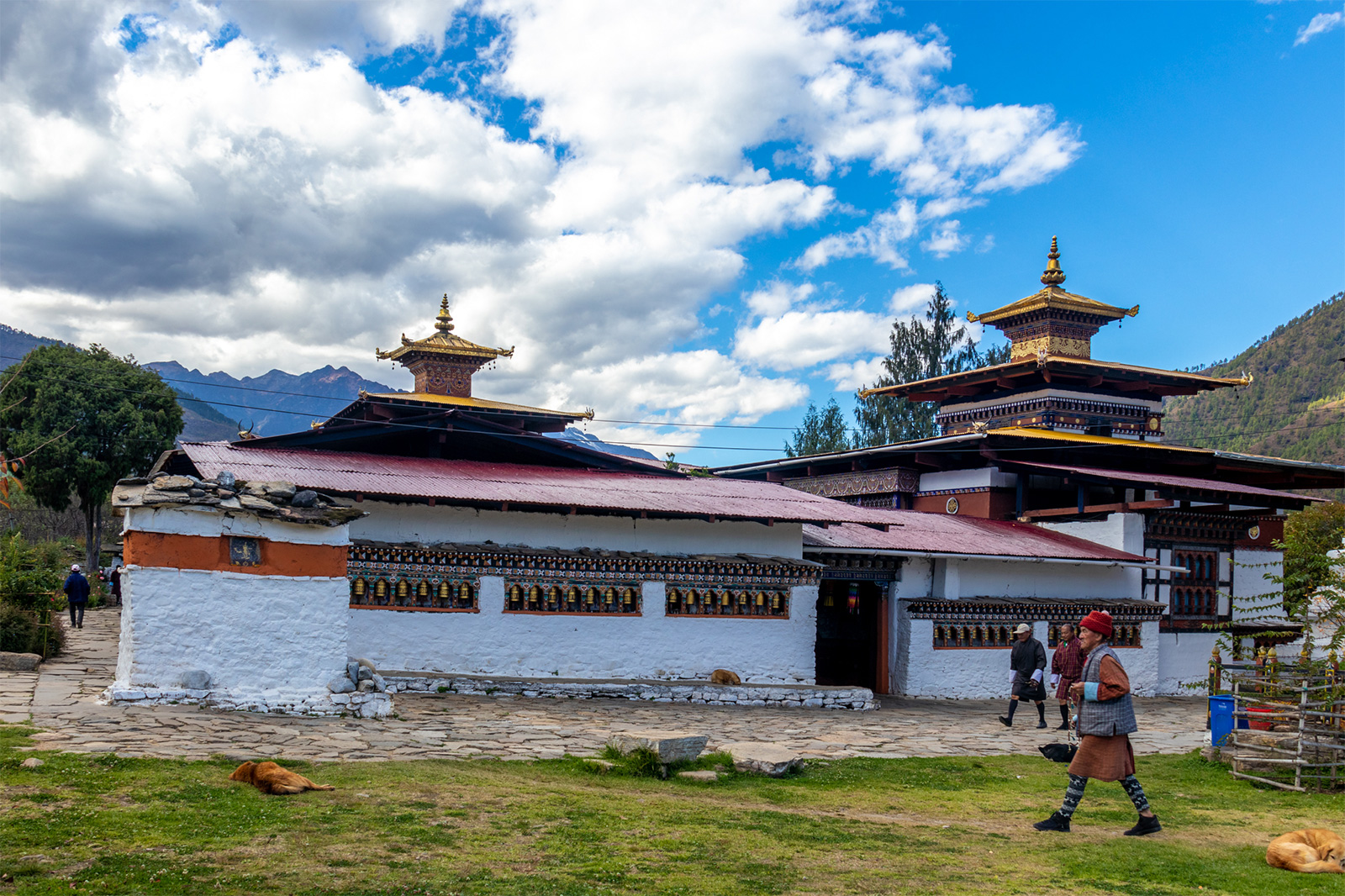
Visit Kyichu Lhakhang, one of Bhutan’s oldest and most revered temples.
The temple is traditionally believed to have been built in the seventh century by the Tibetan emperor Songtsen Gampo. Over time, it has been expanded and visited by important Buddhist teachers, including Guru Rinpoche.
The temple remains an active place of pilgrimage. Its courtyards, prayer wheels and old orange trees create a peaceful setting for reflection.
During your temple visit, take part in a butter lamp offering.
In Buddhist practice, the flame represents wisdom and the removal of ignorance. Lighting a lamp offers a simple, personal moment within the wider journey.
Begin a scenic walk near Ta Dzong and follow the trail through pine and cypress forest towards Zuri Dzong.
The route offers views over Paro town, the airport and the surrounding valley. Built in 1352, Zuri Dzong is considered one of Bhutan’s older fortress structures and is associated with a meditation cave used by Guru Rinpoche.
Depending on the selected route and walking pace, the hike may take between 30 minutes and two hours.
End the day with time to explore Paro town.
Walk between traditional wooden buildings, small cafés, handicraft shops and local stores. This is a good opportunity to choose souvenirs, browse Bhutanese textiles or simply pause over tea before returning to the hotel.
Overnight in Paro.
Elevation in Paro: 2,200 metres
Tiger’s Nest elevation: Approximately 3,120 metres
Approximate activity duration: 5 to 6 hours
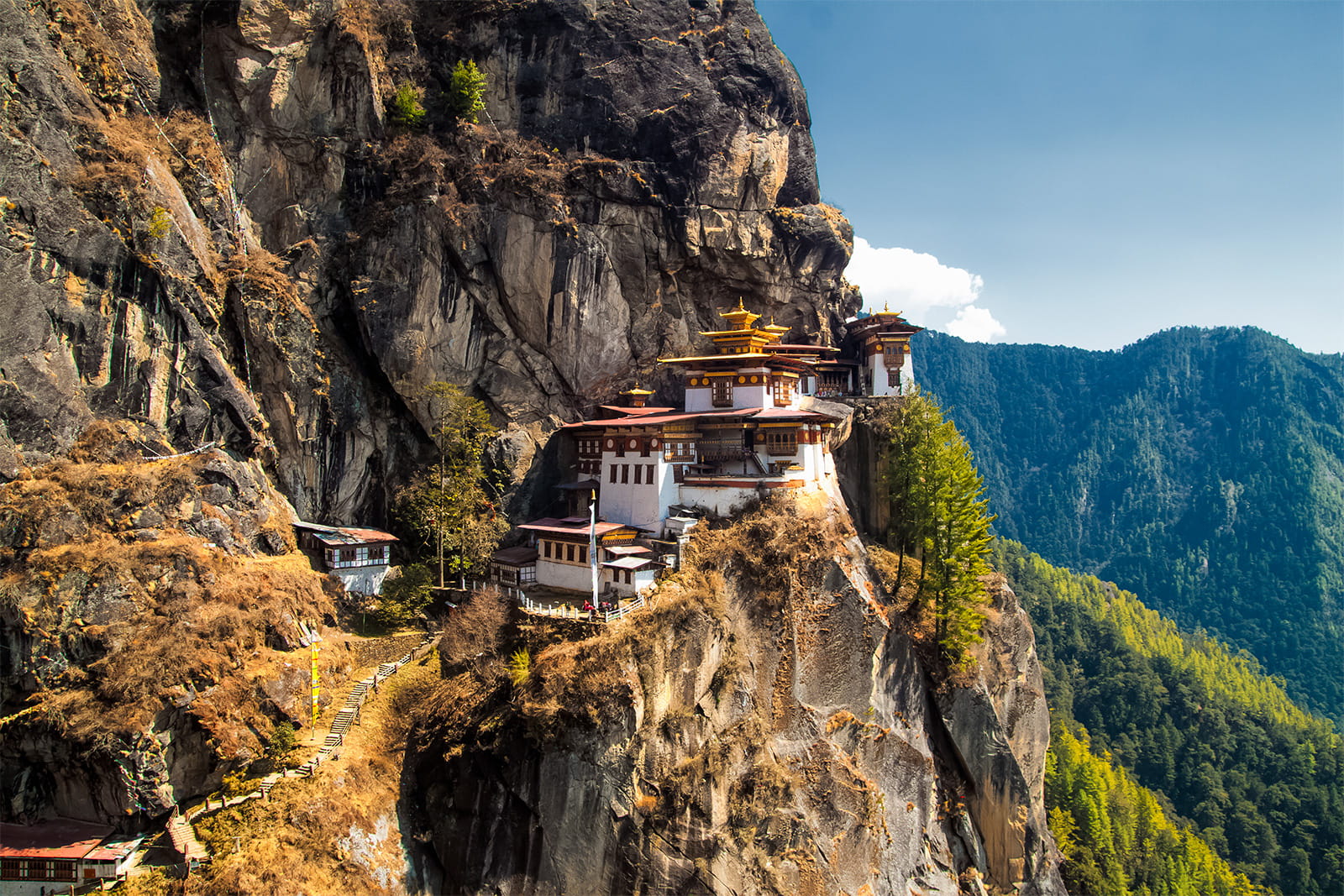
Today brings one of Bhutan’s most memorable experiences, the hike to Taktsang Monastery, better known as Tiger’s Nest.
The monastery appears high above the valley, built against a sheer cliff face. Reaching it requires steady effort, but the walk is carefully paced and broken by forest viewpoints and rest stops.
Begin the hike through pine forest, passing prayer flags and small shrines along the way.
The trail climbs towards a viewpoint and café, where you can pause for refreshments and see the monastery across the gorge. From here, continue along the mountain path and descend a series of steps before making the final approach.
According to Bhutanese tradition, Guru Padmasambhava flew to this site in the eighth century on the back of a tigress and meditated in a cave. The monastery complex was later built around this sacred location in 1692.
Inside, you’ll visit temples and meditation spaces built into the cliff. The experience combines physical challenge, cultural significance and a lasting sense of achievement.
The full visit usually takes between five and six hours, depending on walking pace, trail conditions and time spent at the monastery.
After the hike, you may choose to experience a traditional Bhutanese hot stone bath.
River stones are heated over a fire before being placed into a separate section of a wooden bath. The stones warm the water and release minerals, while local herbs may be added for their fragrance and traditional therapeutic use.
The bath offers a restful end to the day and can be especially welcome after the Tiger’s Nest hike.
Additional charges apply.
Overnight in Paro.
After breakfast, transfer to Paro International Airport for your departure flight.
As you leave the valley, there is time to look back on the places, people and experiences that have shaped the past week. You’ll return home with photographs and memories, but also with a closer understanding of Bhutan’s landscapes, spiritual traditions and measured approach to everyday life.
Your guide will assist with airport arrangements before bidding you farewell.
Tashi Delek, and safe travels home.